La Poste: A Charter for Digital Products
Building a unified editorial framework for millions of users
Team: 1 Head of Design, 1 UX Designer
My Role: UX Designer / Writer
Timeline: 2025
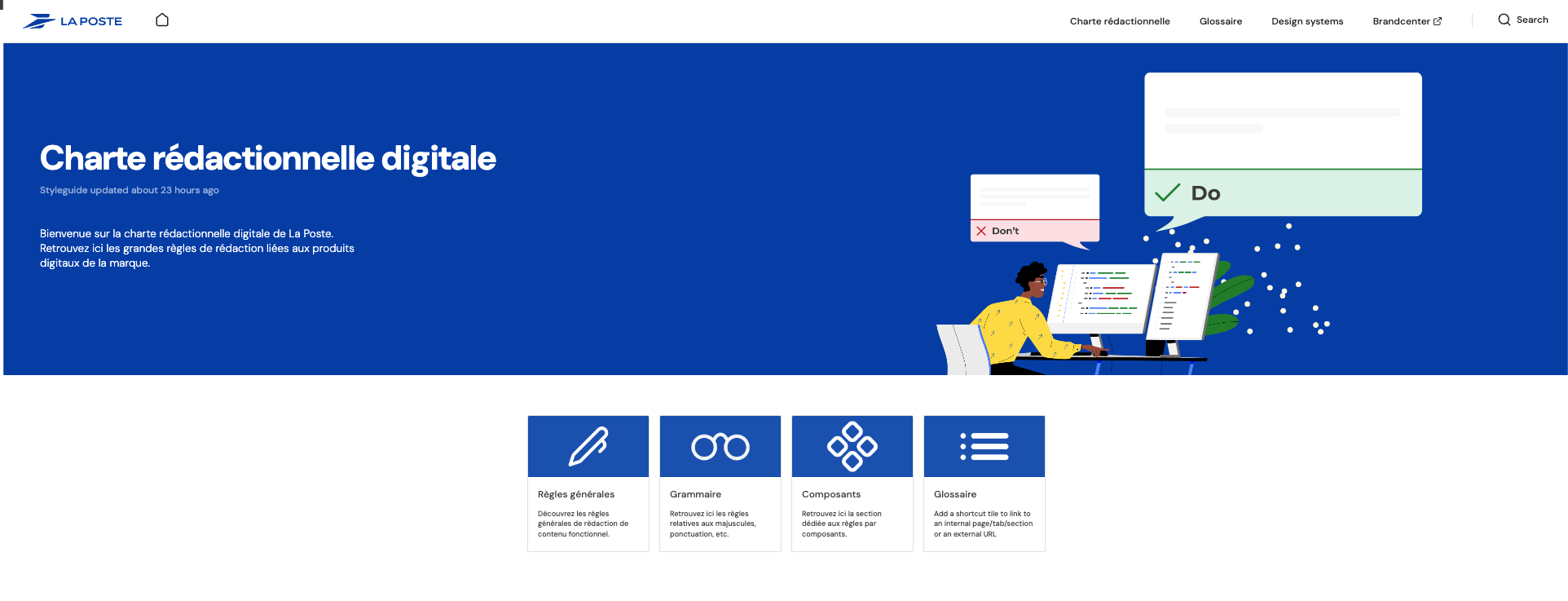
Deliverable: Editorial Charter & Glossary on Zeroheight
Language of the project: French
Other version: French 🇫🇷
Short version
Overview
La Poste needed a unified editorial charter to ensure consistency and clarity across its many digital products. Content inconsistencies, complex wording, and varied terminology were harming both user trust and internal efficiency.
Approach
I led the research and writing process — auditing existing charters, analyzing La Poste’s tone of voice, and running internal and external surveys to align brand identity with user perception. The result was a clear, accessible writing framework, validated through workshops with designers.
Outcome
The finalized charter, hosted on Zeroheight, now serves as a shared reference for all teams, improving communication, efficiency, and brand consistency across La Poste’s digital ecosystem.
Full case study
The context
At the end of 2024, I was assigned to a rather unexpected yet important project: to develop documentation centralizing all editorial rules related to the content of La Poste’s digital products — used today by millions of users.
The situation
Initially, the request for documentation came from the La Poste Online teams, in response to several recurring issues:
Content lacking coherence,
Incorrect use of certain terms (particularly in legal contexts),
Multiple terms are used to express the same information,
Unnecessary syntactic complexity,
Vocabulary unsuited to a general audience.
For customers, the impacts are multiple:
First, confusion — because the content is inconsistent or too complex (remember that La Poste’s audience includes everyone, regardless of age, language, or disability),
Then, frustration, which leads to a poor user experience,
Which in turn leads to a loss of trust and ultimately abandonment of the service.
And on the employees’ side? There were consequences here too:
Inconsistent mockups and communications, which weaken the brand’s global identity,
Difficulty in effectively training new team members,
And more generally, a loss of time and efficiency!
The project goal
The need for a charter was obvious.
We therefore defined our main objective — the guiding principle for this project:
Deliver an editorial charter that allows internal teams to find all key writing guidelines in a dedicated space — aligned with La Poste’s brand values and challenges.
Research phase
Step 1: Centralizing existing charters
The complexity of this project lay in the size of La Poste and its Group.
Rather than creating a brand-new charter from scratch, I first needed to reach out to my colleagues at Pollux to gather all the different documentation developed over the years.
Goal: centralize, understand the decisions made, and identify common rules across them.
After several days of intensive research, we managed to collect around ten existing charters and began analyzing the following criteria:
Tone of voice,
Brand values,
Use of pronouns,
Writing principles.
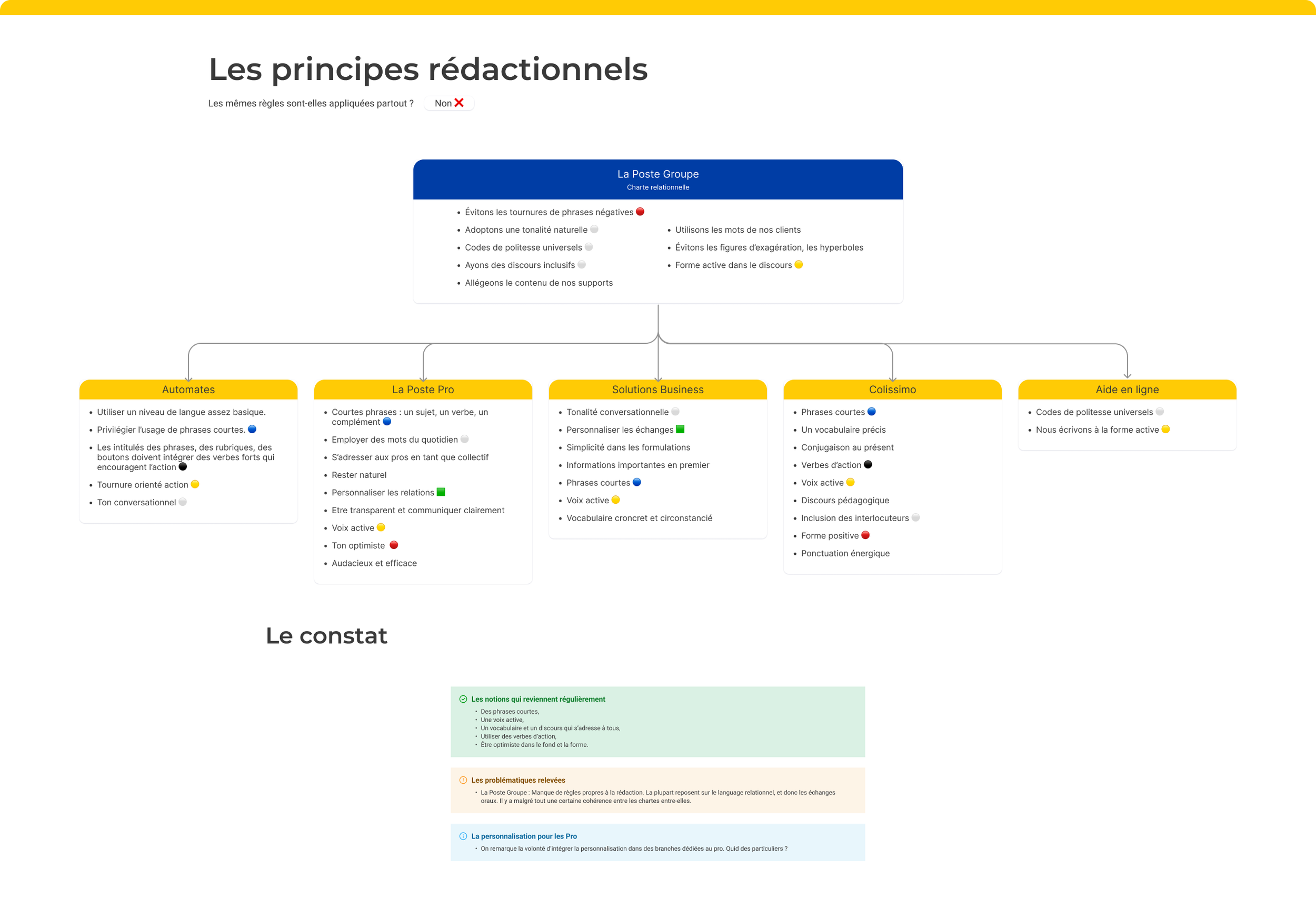
Example: excerpt from the charter audit presented to the client.
Spoiler alert: none of them were based on the brand’s official tone of voice — and none applied the same rules!
Step 2: Finding the right tone of voice
But what is La Poste’s tone of voice?
Once again, I had to investigate to find this crucial common foundation that everyone would need to rely on.
After connecting with the various stakeholders related to the brand, I finally obtained the long-awaited tone of voice document.
However, a new problem arose:
The document only described personality traits — without providing real writing rules to guide professionals.
From this observation, new questions emerged.
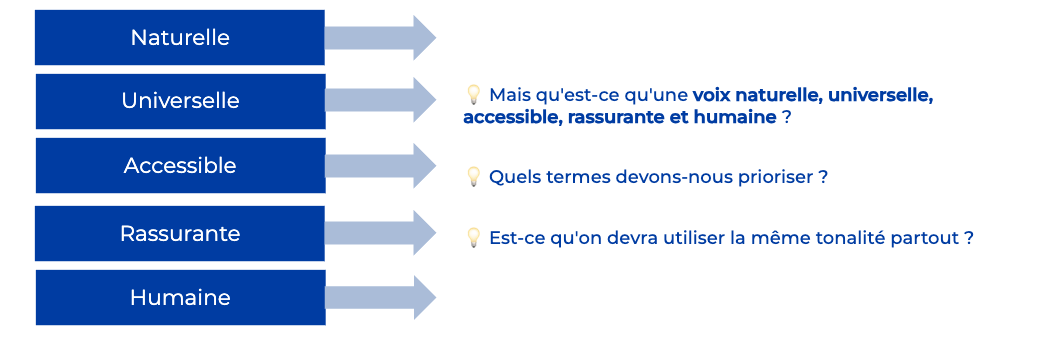
“What’s a natural, universal, accessible, reassuring and human voice? - Which terms should we prioritize? - Should we use the same tone everywhere?”
Step 3: Exploring the brand image
Based on these findings, we decided to launch two separate surveys:
Internal questionnaire: to understand current practices and identify the tools designers and teams use daily to help them write content.
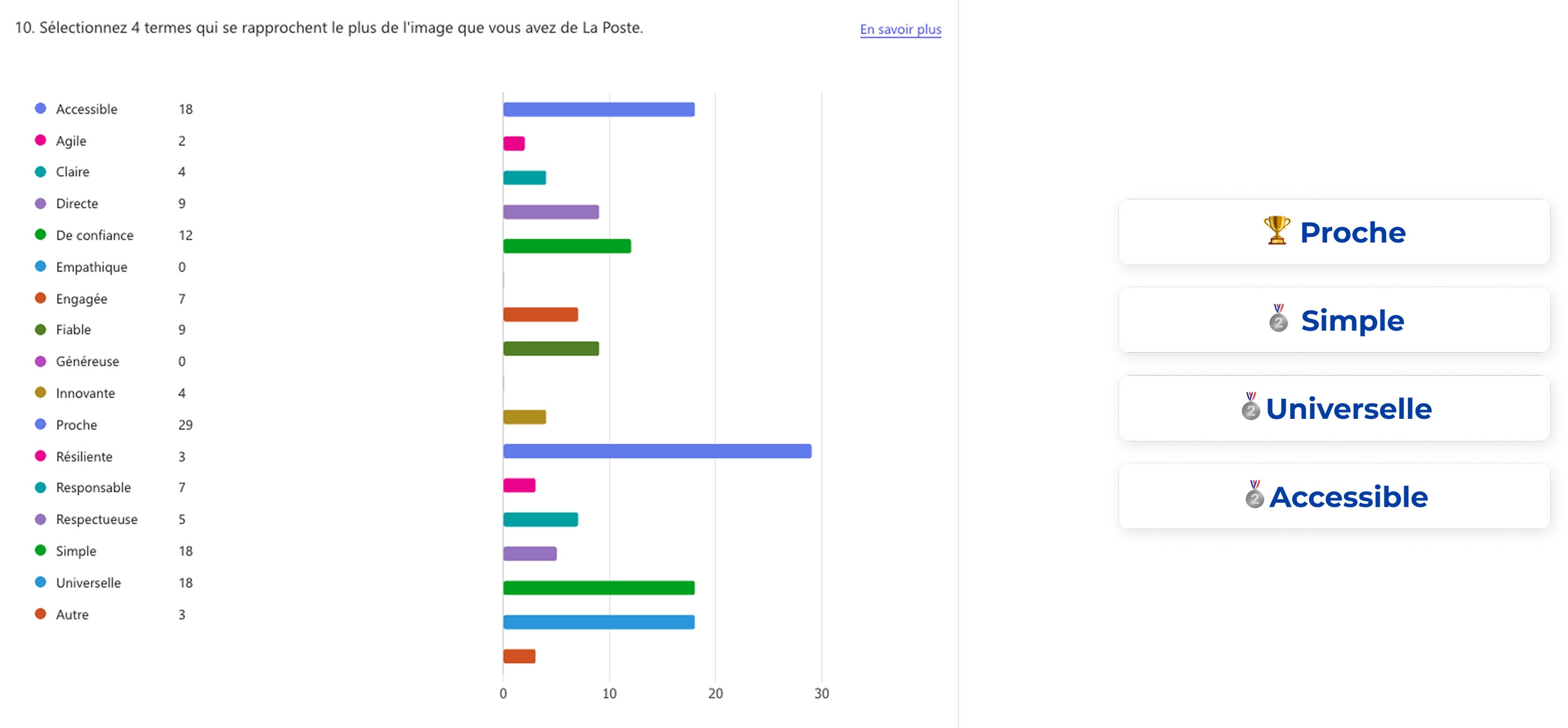
External questionnaire: to compare La Poste’s defined identity with how users actually perceive it.
Example of a result from the external survey.
Writing phase
Defining the adapted rules
Once all these insights were clarified, I had to translate them into concrete editorial rules aligned with the brand.
We chose to host all documentation on a dedicated Zeroheight space, so it would not depend on a single Design System.
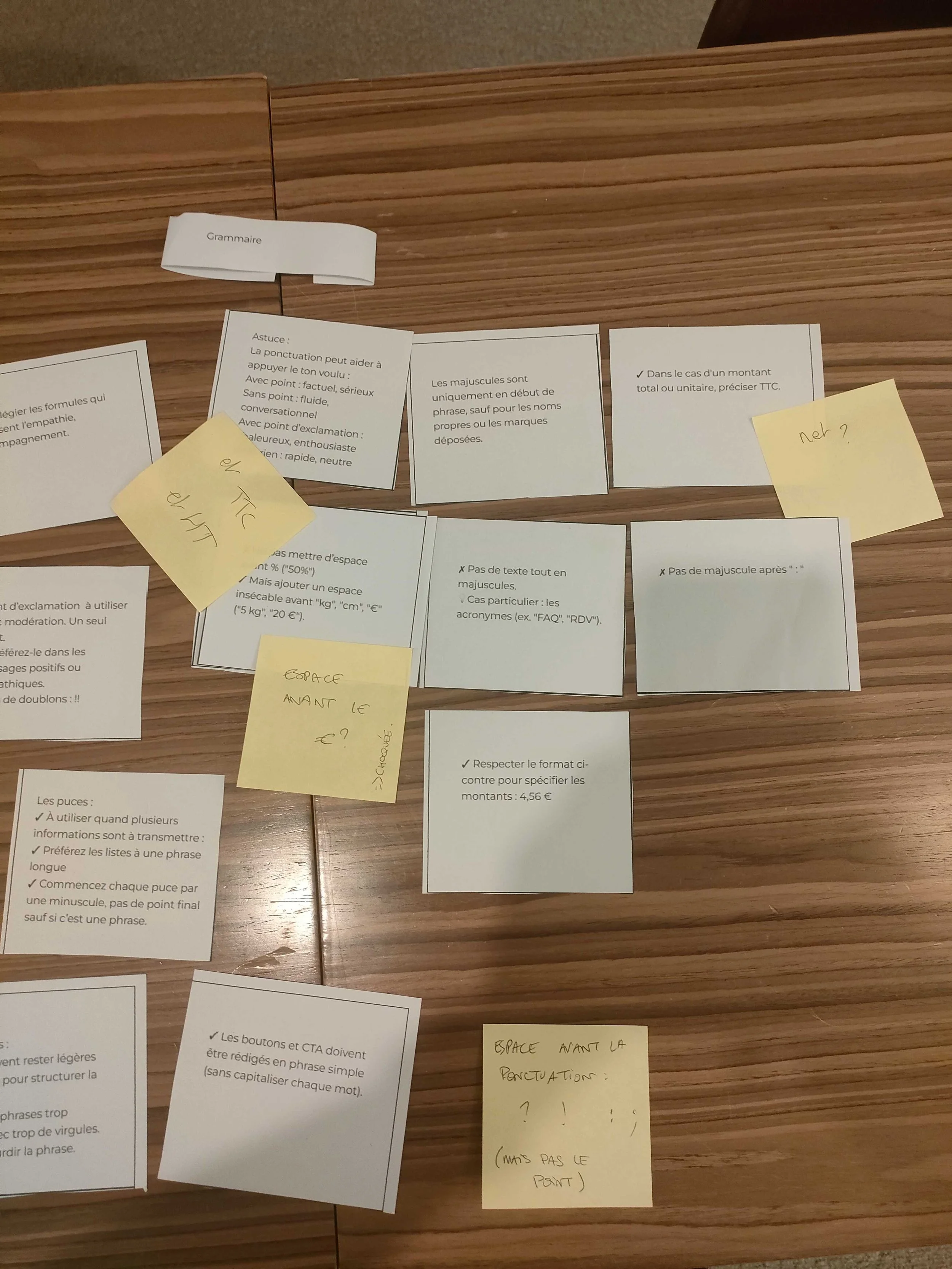
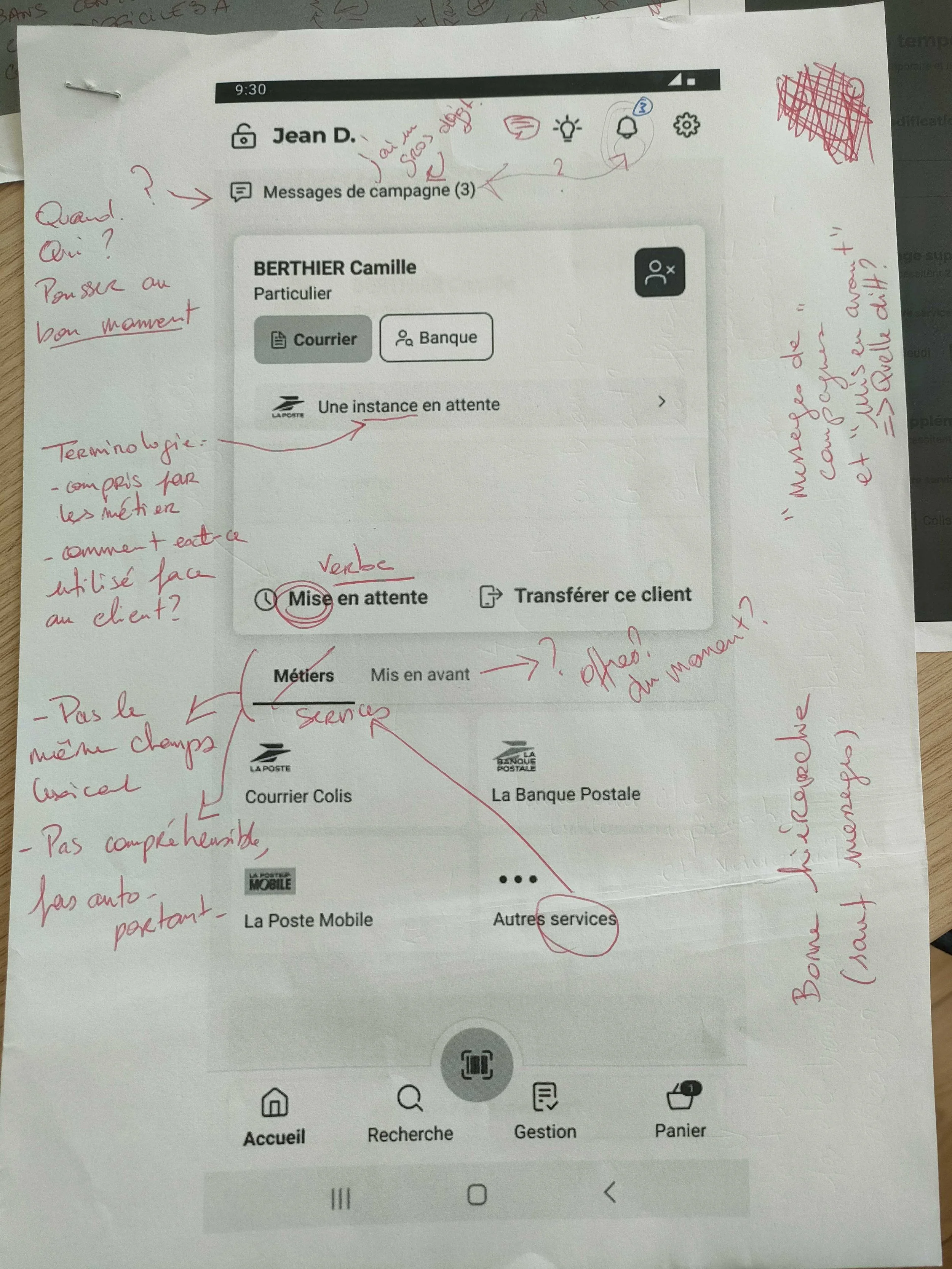
Having the internal teams challenge the rules
After writing the rules, we organized a large workshop with different designers from La Poste.
Here’s how it went:
Step 1: Review the proposed rules
Step 2: Add, challenge, or remove anything they felt necessary
Step 3: Once discussions were complete, teams analyzed the provided mockups to apply and test the effectiveness of the rules
Result:
Designers left the workshop with a better understanding of the basic principles — enabling them to apply a clear editorial framework to their projects. All while staying aligned with the charter’s foundations.
Transferring content to Zeroheight
Once all the rules were consolidated on Zeroheight, the final step was to enrich them with concrete examples — making it easier for designers to understand and find answers quickly.
The charter is now available on a Zeroheight space accessible to all La Poste employees.
Communicating about it
Developing this tool took time — but now comes the equally important step: communicating about it.
To do so, we presented the tool to all designers at Pollux and La Poste, and created collaborative spaces on Figma, where anyone can ask questions or share thoughts about the charter.
Conclusion
Creating this charter was a real challenge, especially since it applies to a brand with so many products and specificities.
Rather than building something entirely new (which might have been faster), we first needed to consolidate everything that already existed and align it with the brand’s identity.
This made the project a delicate blend of centralization, technical writing, and — let’s be honest — a bit of internal diplomacy.
But we’ll need to brace ourselves, because the next challenge is even greater:
Turning the charter into a living, evolving tool!